

À partir de
Départ le 10 avr. 2027
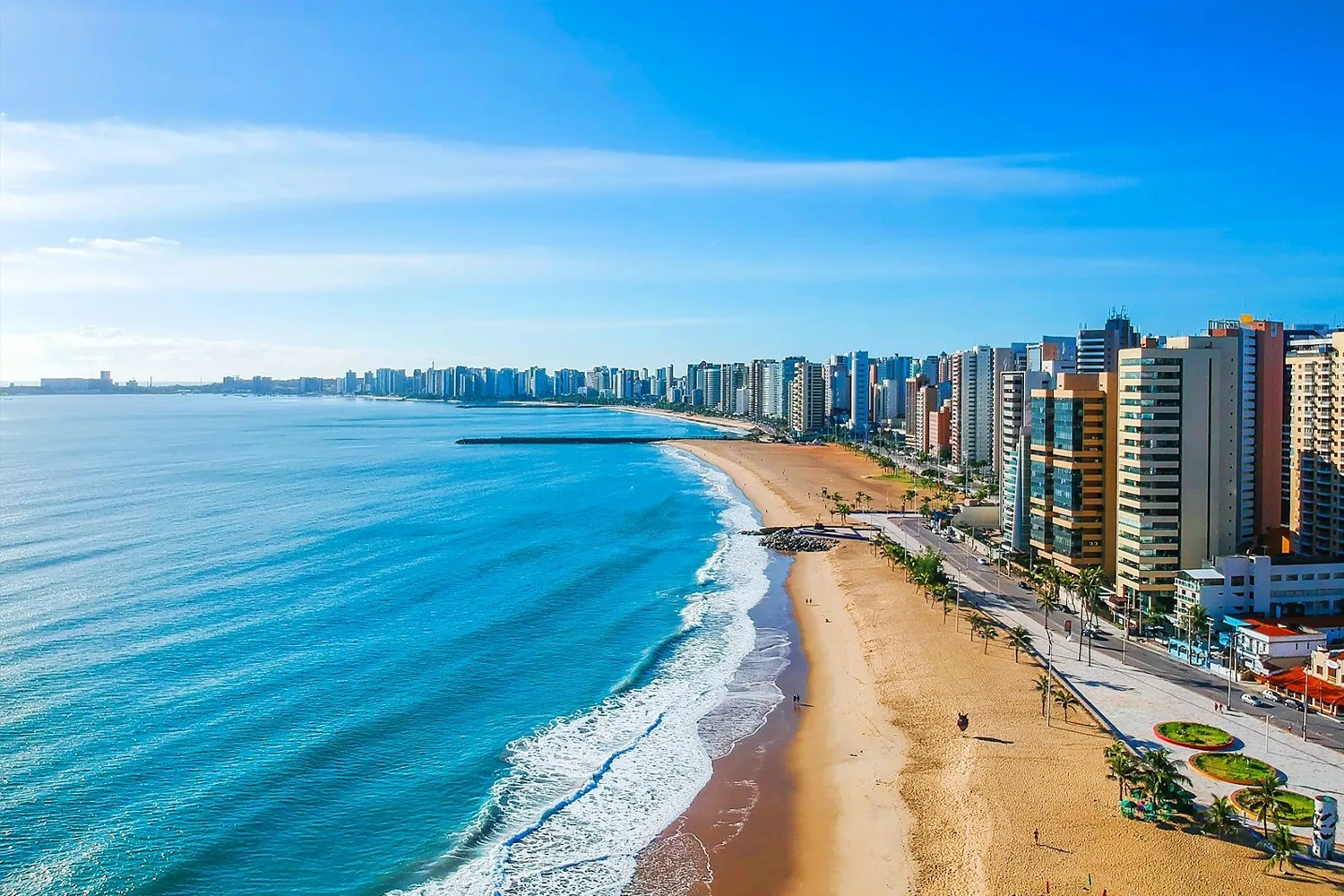
Fortaleza is the state capital of Ceará, in North-East Brazil. It is the second most important city of the region after Salvador, and the fourth largest in Brazil. Its main attractions are its sunny beaches and lively nightlife, with bars, restaurants and shows, but also its cultural heritage. The city centre boasts several historic landmarks, such as the Mercado Central and the Cathedral, the Praça José de Alencar, Cocó Park and the Palácio da Luz, a handsome eighteenth-century neoclassical-style building that formerly housed the state government. In 1649 the Dutchman Matias Beck built the Schoonemborch Fortress on the bank of the Riacho Pajeú stream. Following the expulsion of the Dutch in 1654, it was occupied by the Portuguese, who renamed it Fortaleza de Nossa Senhora da Assunção. The building assumed its current form after 1819 and is now the headquarters of the 10th Military Regiment of the Brazilian Army. The Rosário Church is the oldest in the city, dating from the eighteenth century. According to a legend, the bodies of dead slaves are entombed in its walls. The church has preserved its original wooden altar, portals, paintings and lamps. A statue of Christ stands on a 35-metre-tall column in Praça Cristo Redentor, one of the city's most handsome squares. Those interested in the history of the state can visit the Museu do Ceará, built in 1871, which was formerly the seat of the Provincial Assembly. Fortaleza's main square, Praça do Ferreira, is the nerve centre of the city, where many important historical buildings mingle with the modern stores. The square was inaugurated in 1829 with the name Feira Nova. In 1842 its name was changed to Largo das Trincheiras, and in 1871 it was changed again, to commemorate the pharmacist Antonio Rodrigues Ferreira. The square has been remodelled several times over the years, most recently in 1991, when a new column was erected and the gardens were redesigned, restoring the original architecture. Another square worth a visit is the Praça dos Mártires, where the heroes of the Confederation of the Equator were executed. Built in 1880, in neoclassical style, it is one of the city's main squares. Apart from the old town, Fortaleza's main attraction is the sea and it boasts a wide variety of beaches. Praia do Futuro is the most popular urban beach, Praia Porto das Dunas has the largest water park in Brazil and Praia do Meireles is the site of most of the city's hotels, although it is not recommended for swimming, due to its vicinity to the port. Praia Morro Branco and Praia das Fontes are breathtakingly beautiful.